

collectible shop
Rahula Double-Sided Gau Pendant
Couldn't load pickup availability
✆ +86 190 6806 2710
Imagery & Craftsmanship
Front Image | Mahākāla
The front side depicts a wrathful protector deity represented in the iconographic tradition of Mahākāla.
Visible elements include:
-
Dark-colored face
-
Three eyes
-
Open mouth with visible teeth
-
Red tongue
-
Skull crown
-
Bone ornaments
-
Wrathful facial expression
-
Red, white, and blue color palette
-
Flame motifs and decorative religious background elements
The composition incorporates visual characteristics commonly associated with Mahākāla imagery in Tibetan Buddhist art, including wrathful features, ritual ornaments, and protective symbolism.
Mahākāla is one of the principal Dharma Protectors within Tibetan Buddhist traditions and appears in multiple iconographic forms across different lineages and artistic traditions.
Mahākāla in Buddhist Art
Mahākāla constitutes an established subject within Himalayan Buddhist visual culture.
Historical examples of Mahākāla imagery appear in paintings, sculptures, ritual objects, and portable devotional shrines across Tibet, Bhutan, Nepal, and the Himalayan region.
The iconographic tradition includes a variety of manifestations, each distinguished by specific attributes, ritual implements, ornaments, and compositional structures.
This work presents Mahākāla within that broader artistic and religious tradition.
Reverse Image | Sun and Crescent Moon Motif
The reverse side features a simplified symbolic composition consisting of:
-
Blue background
-
Red circular disc
-
White crescent moon
Unlike the figurative imagery on the front, the reverse employs an abstract visual language.
The composition combines celestial symbols into a concise graphic arrangement, creating a contrast between the deity image on the front and the symbolic imagery on the reverse.
Miniature Sacred Painting
The central imagery is rendered on a miniature scale.
The painting incorporates visual characteristics commonly found in Tibetan Buddhist artistic traditions, including:
-
Strong contour lines
-
Symmetrical composition
-
Saturated color application
-
Frontal deity representation
-
Flame motifs
-
Ritual symbols
-
Decorative framing elements
The artwork condenses a complete religious image into a compact wearable format while preserving multiple layers of visual detail.
Metal Frame Construction
The artwork is enclosed within a square gold-toned metal frame.
Visible structural elements include:
-
Square metal housing
-
Gold-toned border
-
Crown-shaped upper ornament
-
Decorative edge detailing
-
Protective cover over the central image
-
Double-sided construction
The frame serves both decorative and protective functions while providing structural support for the miniature painting.
Symbolic Themes
Mahākāla
Mahākāla is one of the principal protector deities within Tibetan Buddhism.
In Buddhist visual culture, Mahākāla is associated with:
-
Protection
-
Strength
-
Removal of obstacles
-
Guardianship of sacred teachings
-
Transformative spiritual power
The wrathful appearance functions as a traditional artistic expression of protective force and spiritual authority.
Sun and Moon
The reverse-side imagery incorporates the visual symbolism of the sun and moon.
The two celestial forms create a balanced symbolic composition.
Associated themes commonly linked to these motifs include:
Sun
-
Light
-
Awareness
-
Vitality
-
Illumination
Moon
-
Tranquility
-
Cycles
-
Reflection
-
Wisdom
Together, the symbols form a visual representation of cosmic balance and harmony.
Dual-Sided Composition
The pendant presents two distinct visual themes.
Front Side
Mahākāla as a protective deity.
Reverse Side
Sun and crescent moon symbolism.
The combination of figurative and symbolic imagery creates a complementary dual-sided design.
Artistic & Craftsmanship Features
Traditional Gau Format
The pendant follows the structural format of a traditional Gau, a portable devotional shrine used throughout Tibetan Buddhist culture.
Historically, Gau objects have been used to house sacred images, relics, prayers, protective objects, and other religious materials.
The enclosed format combines religious imagery with wearable object design.
Miniature Religious Painting
The artwork presents a complete sacred image within a highly compact format.
The miniature scale requires detailed rendering of facial features, ornaments, color transitions, and decorative motifs within a limited pictorial space.
Double-Sided Religious Imagery
Both sides of the pendant contain complete visual compositions.
The front presents a deity image, while the reverse presents symbolic celestial imagery, creating a two-sided devotional artwork.
Integration of Painting and Metalwork
The piece combines multiple artistic disciplines, including:
-
Miniature sacred painting
-
Metal craftsmanship
-
Decorative relief work
-
Pendant construction
Together, these elements form the complete artistic structure of the work.
Wearable Devotional Art
The combination of miniature religious imagery and a protective metal housing transforms the artwork into a portable devotional object.
The traditional Gau format preserves sacred imagery within a wearable structure, integrating religious art, craftsmanship, and personal adornment into a single piece.


Rahula Double-Sided Gau Pendant
thangka
Collection Details
You may also like
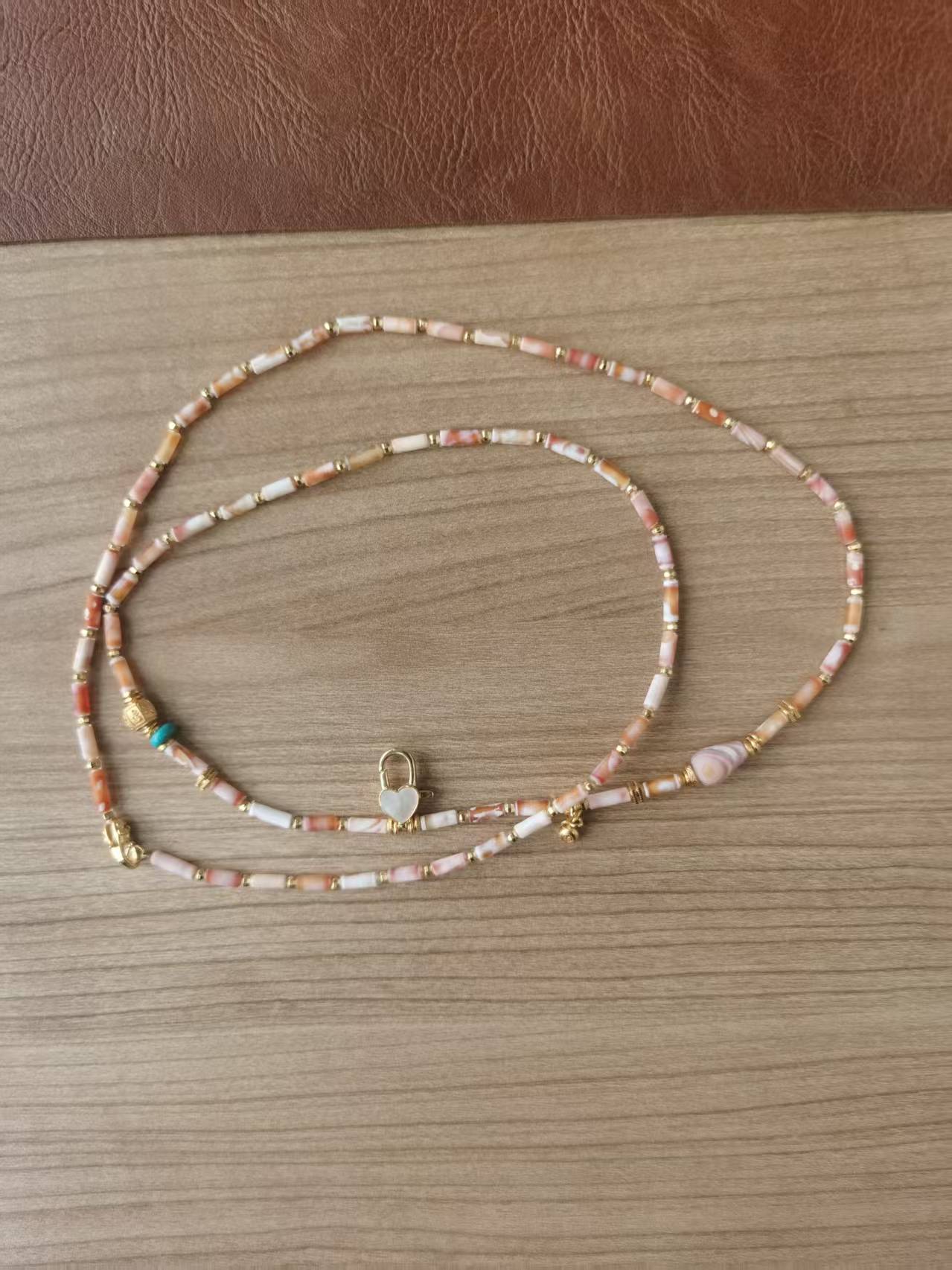
Pink Coral Tube-Bead Long Necklace
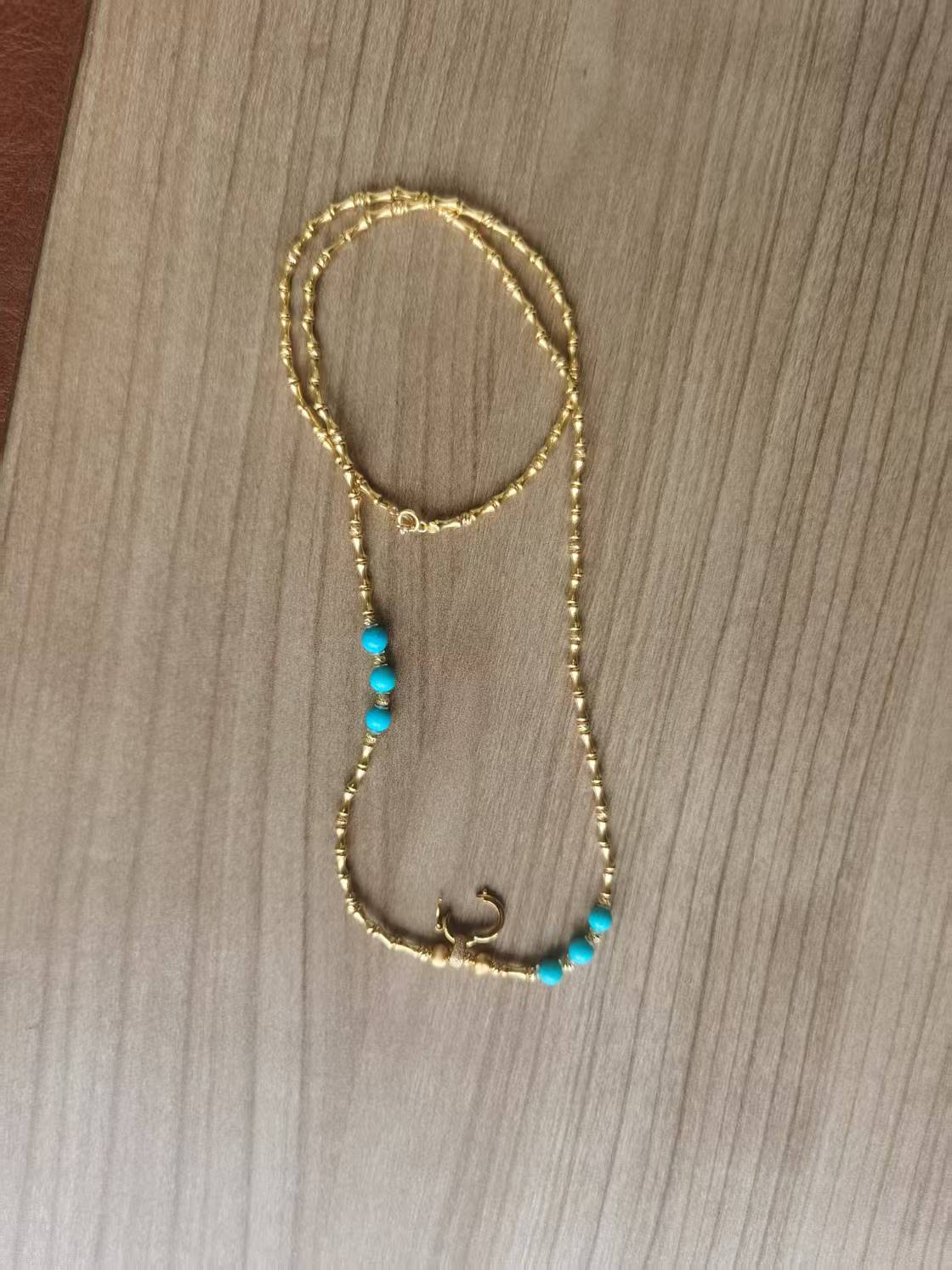
18K Gold-Tone Turquoise Accent Collarbone Necklace
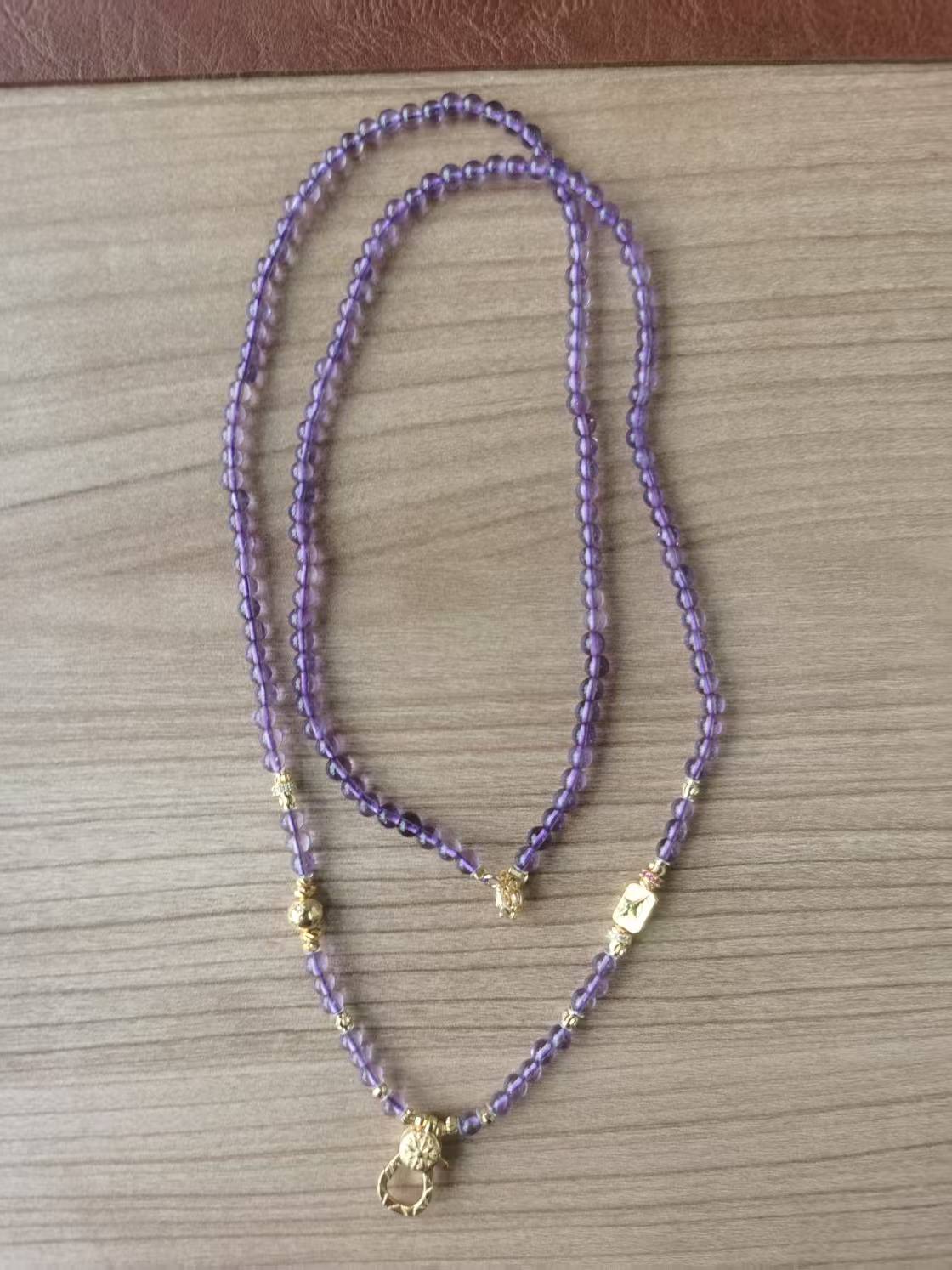
Natural Amethyst 6mm Multi-Way Long Necklace
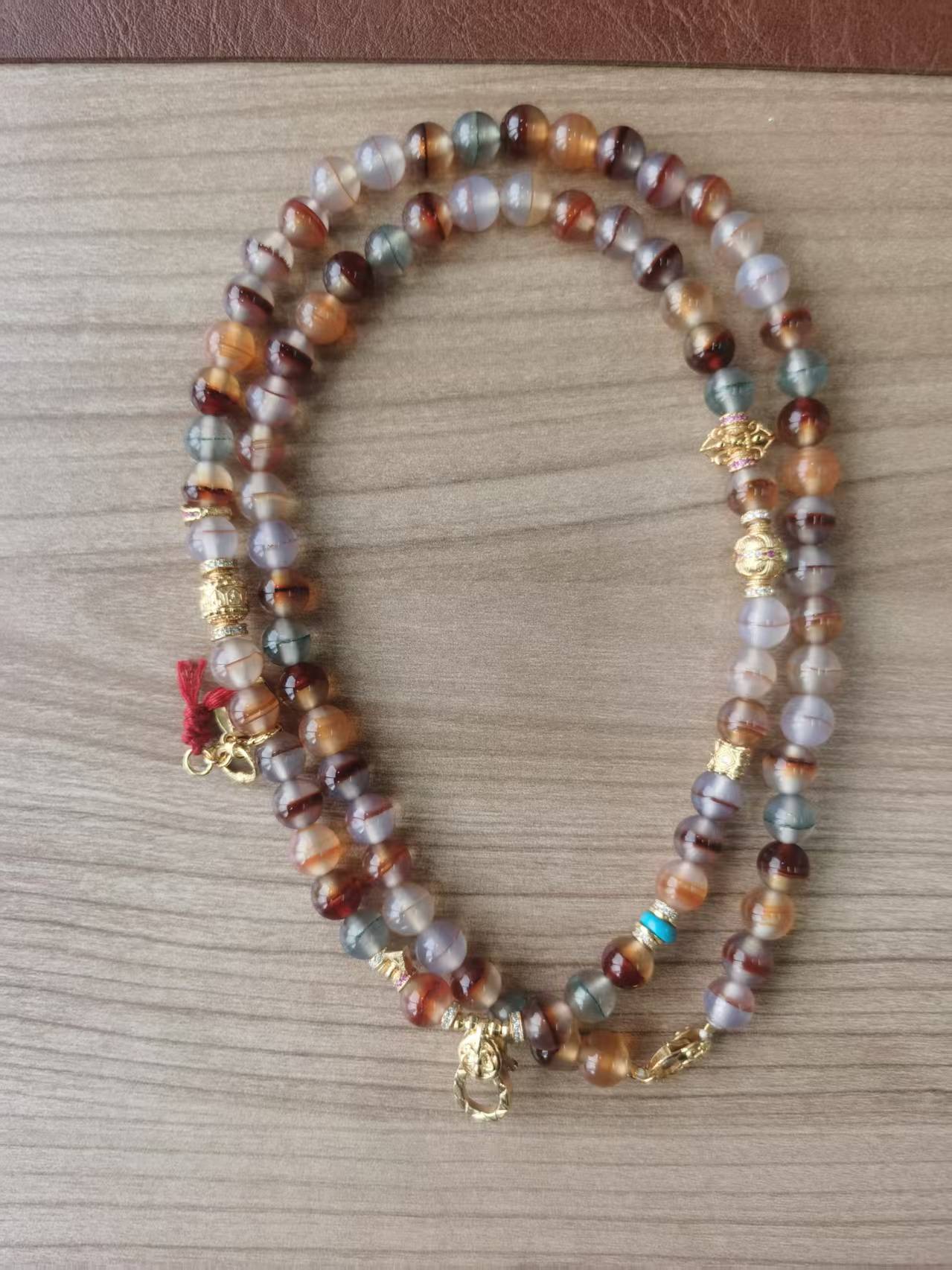
Natural Multicolor One-Line Medicine Buddha Agate Multi-Way Long Necklace
Black Gold Super Seven Multi-Way Long Necklace

Natural Black Gold Super Seven Beads

Natural Tiger’s Eye Multi-Way Long Necklace
